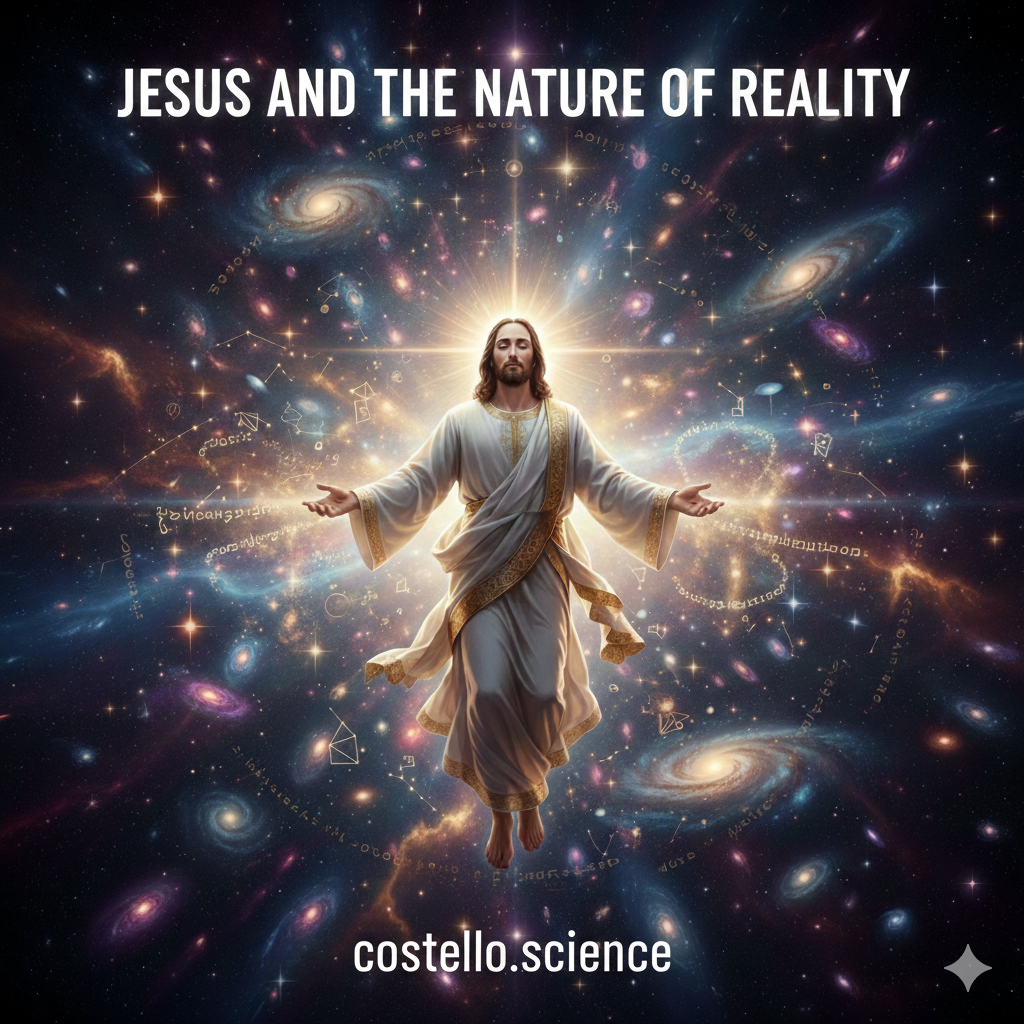
Think of the world like a massive ocean of “maybe.” It only becomes a solid “yes” once you actually decide to dive in. For a long time, we were taught that life is just a movie we’re forced to watch, but both modern science and the stories of Jesus suggest something much more exciting: we’re actually the ones holding the camera.
When Jesus told people that reality would shift “according to their faith,” he wasn’t just being poetic. He was describing a universe that isn’t a cold, dead machine, but a responsive field that reacts to what we truly expect. He taught that the “Kingdom” isn’t some far-off place in the clouds. It’s a hidden layer of possibility right in front of our faces: one that stays invisible until we change how we choose to look at it.
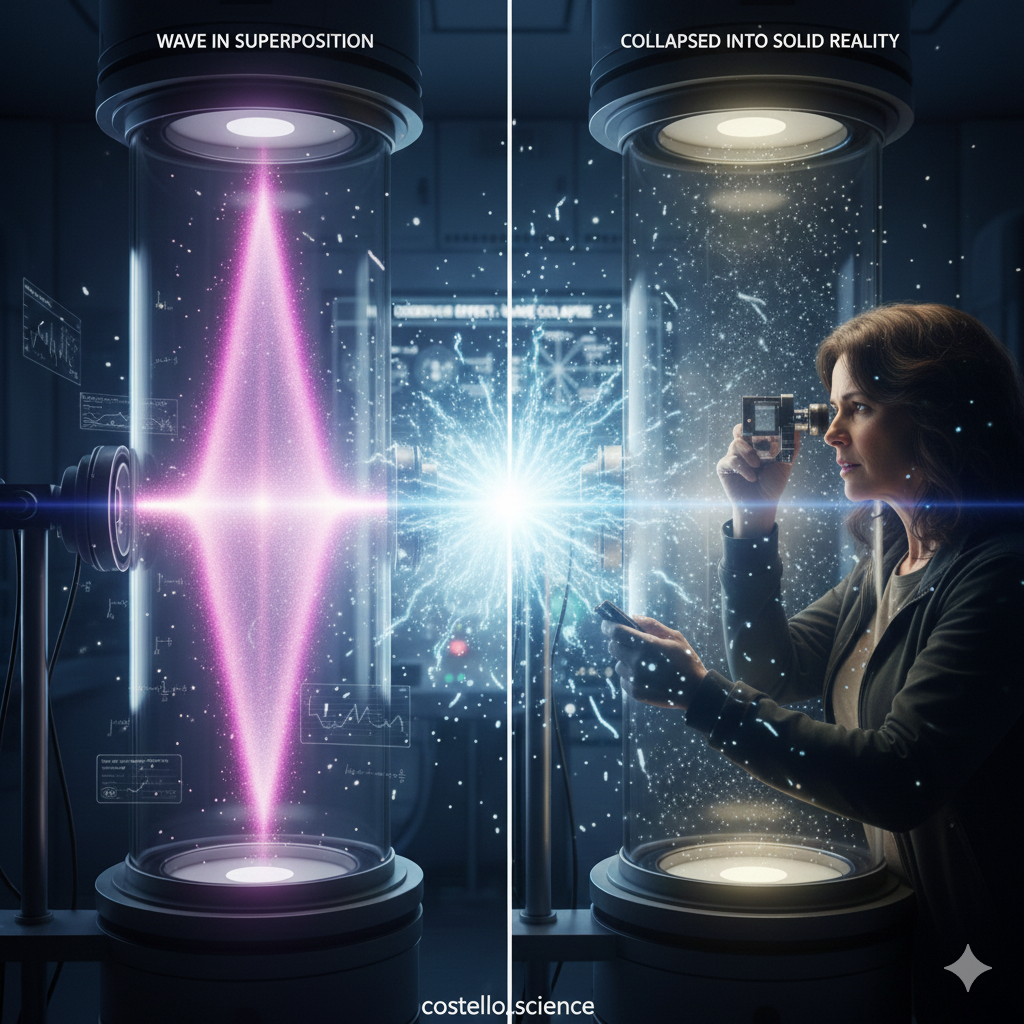
Scientists are seeing this exact same thing in their labs today. They’ve discovered that tiny bits of matter don’t just sit there being solid all by themselves; they actually change and “show up” based on the person watching them. This means we aren’t just victims of a world that is “set in stone.” Instead, our curiosity and our focus act like a master key. They unlock versions of reality that stay closed to people who are too cynical to even try looking. In the end, the scientist and the Teacher are saying the same thing: the universe is a conversation, and what you hear depends entirely on how you choose to listen.
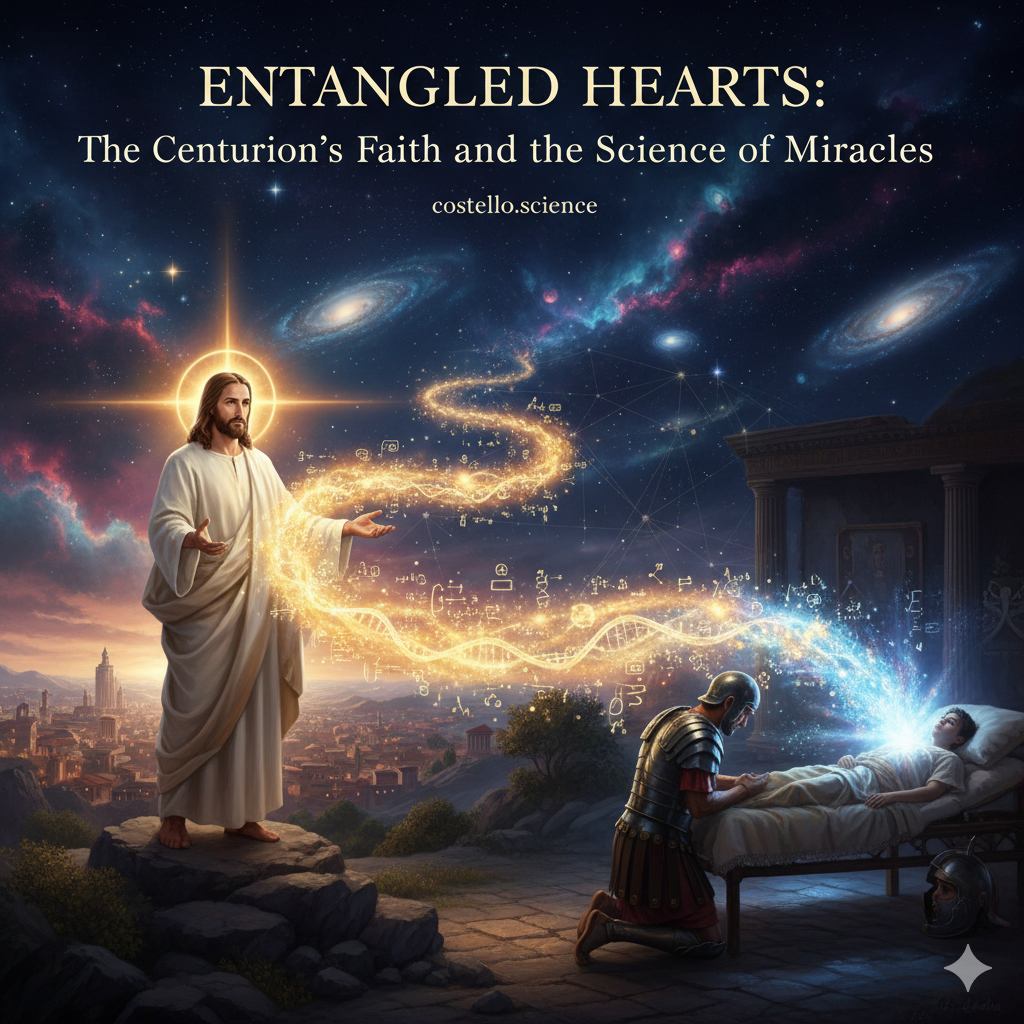
This gets even wilder when you look at how Jesus healed a servant from miles away without ever stepping foot in the house. He was basically demonstrating what physicists now call “entanglement.” In a lab, once two particles become linked, they stay connected in a way that defies logic : if you poke one, the other reacts instantly, even if it’s on the other side of the planet.
Jesus seemed to have this bone-deep understanding that we aren’t just separate “islands.” We’re all woven into a single, invisible web where distance is just an illusion. By locking onto a specific vision of health, he was essentially tugging on one end of a cosmic string that was already tied to the person across town. This suggests that our own thoughts and beliefs aren’t just trapped inside our heads; they’re more like signals sent through a field we’re all plugged into. It turns the idea of “prayer” or “intention” into something very practical: a way of interacting with a world where everyone and everything is secretly touching.
Thanks for sharing this—it’s a really interesting way to connect faith and modern ideas about reality. I enjoyed reading it and seeing how you framed belief, intention, and science together.
Excellent article. Thank you for taking the time to craft such thoughtful insight.